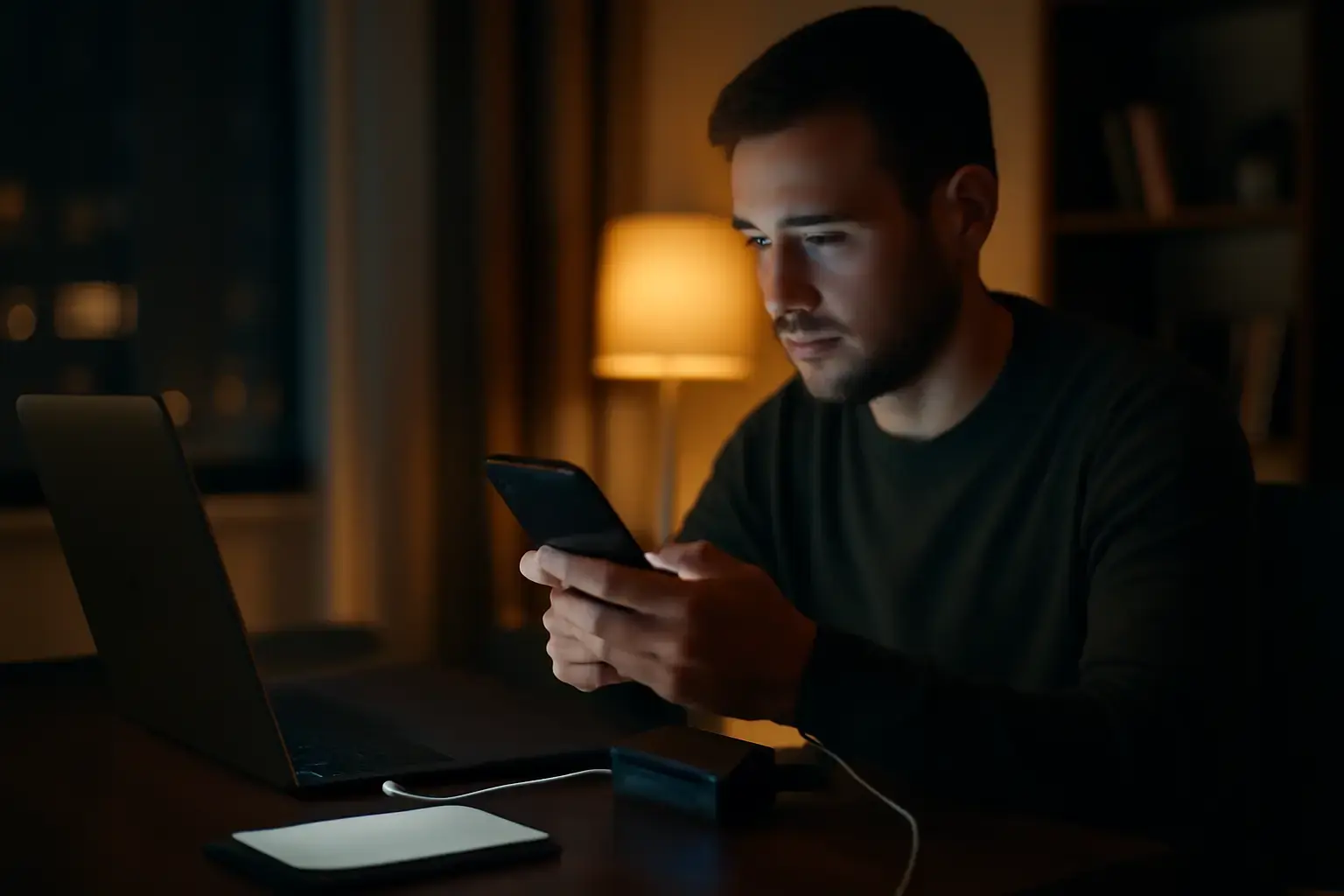
Why Safe Overnight Charging Matters More for Remote Workers
For remote workers, charging habits directly affect productivity, battery lifespan, and long-term device reliability. Most people leave their laptop, phone, tablet, earbuds, and accessories plugged in overnight so everything is fully charged before the next workday. However, not every USB-C charger is designed to safely manage continuous multi-device charging for 6–10 hours at a time.
Low-quality chargers often struggle with thermal management, unstable voltage delivery, and inconsistent power distribution when several devices are connected simultaneously. Over time, this can accelerate battery degradation, reduce charging efficiency, and in rare cases create overheating risks.
A modern USB-C multi-device charger built for overnight charging should do more than simply provide enough wattage. It should intelligently regulate power flow, monitor temperature in real time, protect connected devices from surges or short circuits, and maintain stable charging speeds without excessive heat buildup.
For professionals working remotely in 2026, reliable overnight charging is no longer optional. A dependable charging setup ensures your laptop, smartphone, and tablet are ready every morning without stressing batteries or risking long-term hardware damage.
Related reading: Best Current-Gen Noise-Canceling Headphones Under $300 for Remote Workers Sharing Space in 2026: Privacy Without Breaking the Bank
What Makes a USB-C Charger Safe for Overnight Charging?
The safest chargers in 2026 combine advanced GaN technology, intelligent power delivery, and comprehensive protection systems. These features help maintain stable charging while reducing excess heat during extended overnight sessions.
Here are the most important features to prioritize:
- USB Power Delivery 3.1 Support: Modern laptops and tablets increasingly rely on USB PD 3.1 for fast, efficient charging. Chargers supporting the latest standard provide better voltage regulation and compatibility with newer devices.
- Dynamic Intelligent Power Allocation: Premium chargers automatically distribute wattage depending on connected devices. This prevents overloading a single port while maintaining efficient charging speeds across all devices.
- GaN (Gallium Nitride) Technology: GaN chargers generate significantly less heat than older silicon-based models. Lower operating temperatures make them far more suitable for overnight charging.
- Advanced Thermal Monitoring: High-end chargers constantly monitor internal temperatures and reduce output if excessive heat is detected.
- Overcharge and Trickle-Charge Management: Smart chargers gradually reduce power delivery after devices reach high battery levels, minimizing battery stress during long overnight charging sessions.
- Certified Safety Standards: Look for certifications such as UL, FCC, CE, ETL, or TÜV. These indicate the charger has passed electrical safety testing.
- Stable Multi-Port Performance: Some chargers dramatically reduce power output when multiple ports are occupied. Better models maintain efficient charging speeds even with a laptop, tablet, and phone connected simultaneously.
Why GaN Chargers Are Better for Remote Work Setups
GaN chargers have become the preferred option for remote workers because they are smaller, cooler, and more efficient than traditional chargers. This matters especially for people who keep chargers plugged in every night and travel frequently between workspaces.
Compared with older silicon chargers, GaN models typically offer:
- Lower heat generation during long charging sessions
- Higher power efficiency
- More compact travel-friendly designs
- Better high-wattage performance for laptops
- Improved long-term reliability
For remote professionals using devices like MacBook Pro, Dell XPS, Lenovo ThinkPad, iPad Pro, Samsung Galaxy Tab, or flagship smartphones, GaN technology delivers safer and more stable overnight charging.
Common Mistakes People Make When Buying Multi-Device Chargers
Many buyers focus only on advertised wattage while ignoring safety and real-world charging behavior. This often leads to slow charging, overheating, or reduced battery health over time.
- Buying Underpowered Chargers: A charger with insufficient total wattage may struggle to charge a laptop, phone, and tablet simultaneously. For most remote workers, 100W or more is ideal.
- Ignoring Power Distribution Rules: Some chargers advertise 100W maximum output but split power aggressively once multiple devices are connected. Always check actual multi-port distribution specifications.
- Using Cheap USB-C Cables: Even excellent chargers perform poorly with low-quality cables. Use certified 100W or 240W USB-C cables from trusted brands.
- Skipping Safety Certifications: Extremely cheap chargers without recognized certifications may expose devices to unstable voltage or overheating risks.
- Overlooking Laptop Requirements: Some laptops require 90W–140W charging for full-speed performance during heavy workloads.
- Leaving Chargers on Soft Surfaces: Charging on beds, couches, or carpets traps heat and reduces charging safety.
Best USB-C Multi-Device Chargers for Remote Workers in 2026
These chargers stand out for their safety features, stable power delivery, thermal management, and reliability during overnight charging.
See also: Phone Launches That Matter for Mobile Productivity Users in 2026 📱💡
-
Anker Prime 240W GaN Desktop Charger
This is one of the strongest options for serious remote work setups in 2026. It supports USB PD 3.1 with up to 240W total output, making it ideal for simultaneously charging a high-performance laptop, tablet, smartphone, and accessories overnight.The charger uses advanced GaN architecture combined with ActiveShield temperature monitoring, which continuously checks temperature millions of times daily to reduce overheating risks. Multiple USB-C ports support high-wattage charging without major throttling, and power distribution remains stable under heavy load.
It is especially well-suited for MacBook Pro users, creators, developers, and professionals running multiple devices every day.
-
UGREEN Nexode 140W GaN Charger
UGREEN’s latest Nexode series has become highly respected among remote workers because of its balance between portability, thermal efficiency, and charging performance.The 140W model supports laptops, tablets, and phones simultaneously while maintaining excellent temperature control during overnight charging. It also supports modern fast-charging standards used by Apple, Samsung, Lenovo, Dell, and other major brands.
Its compact design makes it ideal for hybrid workers who frequently move between home, coworking spaces, and travel environments.
-
Anker 747 GaNPrime 150W Charger
The Anker 747 remains one of the most practical all-around chargers for remote workers in 2026. It includes four ports with intelligent power allocation and advanced safety monitoring.The charger automatically redistributes power depending on device requirements, allowing a laptop, tablet, and smartphone to charge efficiently overnight without unstable voltage delivery.
Its GaNPrime power management system helps reduce heat while improving charging efficiency over extended sessions.
-
Satechi 165W USB-C 4-Port PD GaN Charger
Satechi’s 165W charger is particularly popular among Apple ecosystem users because it handles multiple USB-C devices smoothly.It can comfortably charge a MacBook, iPad, iPhone, and accessories simultaneously while maintaining consistent overnight charging stability. The desktop-oriented design also works well for permanent remote workstation setups.
-
Baseus 140W GaN5 Pro Fast Charger
Baseus has improved significantly in recent years, and its GaN5 Pro models now compete strongly in thermal management and charging safety.This charger offers strong value for users who want reliable overnight charging without paying premium flagship pricing. It supports high-speed laptop charging alongside phones and tablets while maintaining compact portability.
How Much Wattage Do Remote Workers Actually Need?
Choosing the correct wattage prevents slow charging and improves long-term charger efficiency.
- Light Productivity Setup: Phone + tablet + ultrabook → 65W–100W
- Standard Remote Work Setup: Laptop + phone + tablet + accessories → 100W–140W
- Power User Setup: High-performance laptop + multiple devices → 140W–240W
In 2026, most remote workers benefit most from chargers in the 100W–140W range because they provide enough overhead for stable multi-device overnight charging without running near maximum thermal limits continuously.
How to Safely Charge Multiple Devices Overnight
Even the best charger performs better when paired with proper charging habits.
- Use Certified High-Wattage USB-C Cables: Poor cables can create instability, slower charging speeds, or excessive heat.
- Place Chargers on Ventilated Hard Surfaces: Good airflow significantly improves heat dissipation.
- Avoid Daisy-Chaining Power Strips: Overloaded extension setups can increase electrical risks.
- Keep Firmware Updated: Many modern laptops and phones include adaptive battery protection features that optimize overnight charging.
- Disconnect Unnecessary Devices: Fewer active charging devices reduce thermal stress.
- Use Smart Charging Features: Apple, Samsung, Google, and Lenovo devices now include battery optimization settings designed specifically for overnight charging.
For more on how to choose multi-device chargers specifically for overnight use, see our detailed guide here. Also check out our selection of best USB-C accessories for expanding connectivity, which pair well with chargers optimized for remote work.
You may also like: Best Phones Launched in Early 2026 for Mobile Productivity Users: Buying and Setup Guide 📱💡
Are Overnight Charging Risks Still a Problem in 2026?
Modern flagship phones, tablets, and laptops are much safer than older devices thanks to advanced battery management systems. However, charging risks still increase when using low-quality chargers, poor cables, or overloaded power setups.
Premium USB-C chargers now include intelligent protections against:
- Overcurrent
- Overvoltage
- Overheating
- Short circuits
- Power surges
- Excessive battery stress
When combined with certified cables and proper ventilation, high-quality GaN chargers are generally very safe for overnight use in modern remote work environments.
Final Recommendation: Balancing Safety, Power, and Long-Term Reliability
The best USB-C multi-device chargers for remote workers in 2026 are not simply the chargers with the highest wattage. The real difference comes from intelligent power management, thermal efficiency, safety certifications, and stable overnight performance.
For most users, premium GaN chargers from trusted brands like Anker, UGREEN, Satechi, and Baseus offer the safest and most reliable experience for charging a laptop, phone, and tablet overnight.
If you regularly work remotely, investing in a high-quality USB-C charger protects your devices, improves charging consistency, reduces battery wear, and creates a safer long-term workstation setup.
One useful way to judge Best USB-C Multi-Device Chargers for Remote Workers Who Need Safe Overnight Charging of Laptop, Phone, and Tablet is to compare how consistently the charger performs during months of repeated daily charging rather than relying only on short benchmark tests or advertised specifications.