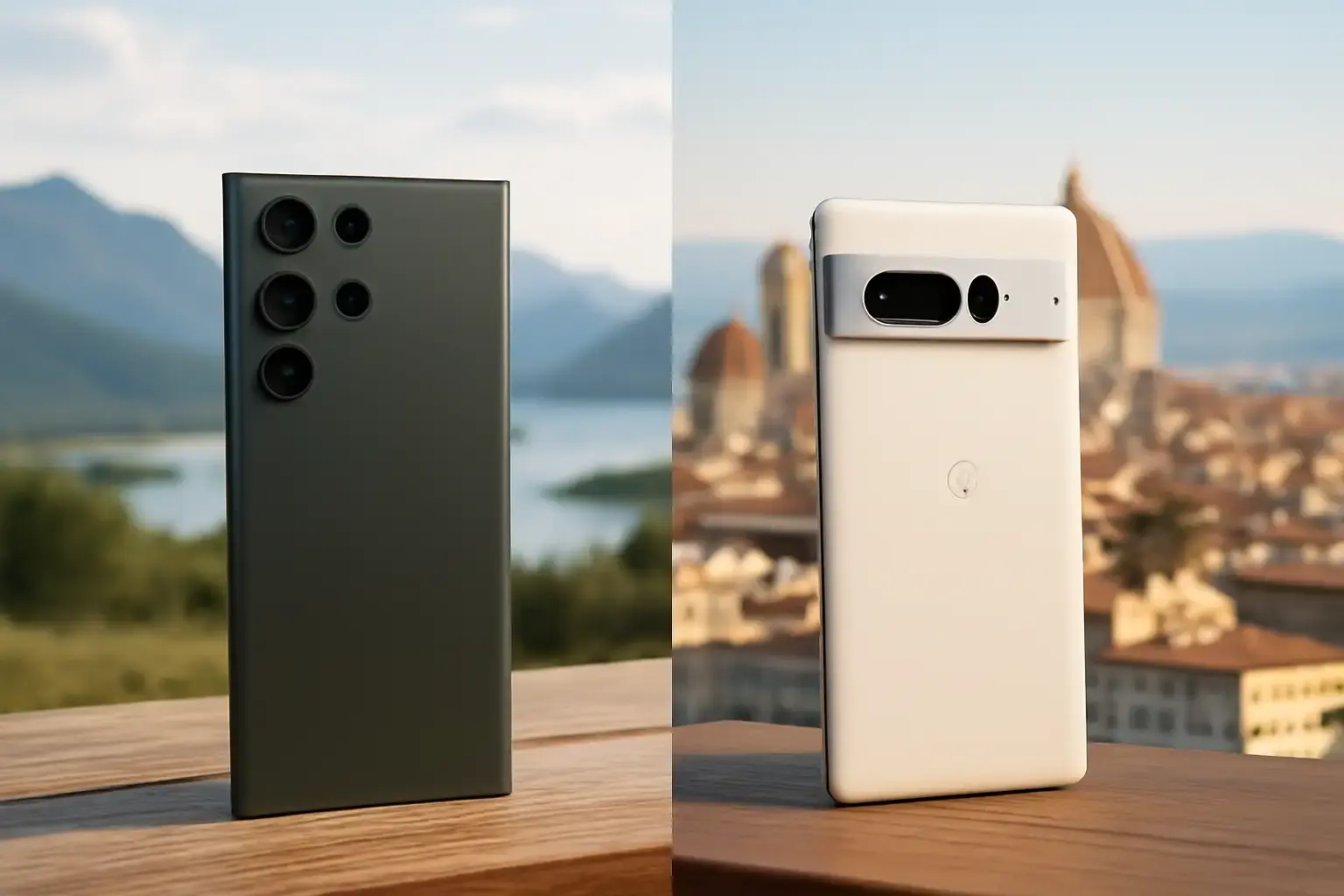
Why Camera Performance Matters Most for Travelers
When you’re traveling, your smartphone camera isn’t just about taking snapshots — it’s your primary tool to capture moments, landscapes, and cultural details without lugging extra equipment. The Samsung Galaxy S26 Ultra and Google Pixel 8 Pro represent the pinnacle of Android photography in 2026, but they take markedly different approaches. To avoid buyer’s remorse, you need to understand which phone’s camera excels in travel-specific use cases: low-light street scenes, versatile focal lengths, easy editing, and reliable AI enhancements.
Both phones boast flagship-level hardware, but pixel counts, sensor sizes, and computational photography software vary significantly, impacting your results far beyond specs sheets. This comparison aims to clarify these distinctions and help you pick the device that aligns with your travel photo style.
Camera Hardware Breakdown: What Each Phone Packs
Samsung Galaxy S26 Ultra: Samsung continues its tradition of pushing sensor sizes and megapixels, equipping the S26 Ultra with a 200MP main sensor, offering incredible resolution for cropping and large prints. It features a quad-camera setup including an improved periscope telephoto with 10x optical zoom and a wide ultrawide module optimized for landscapes and architecture shots. The ultra-wide also supports macro focus, a boon for capturing intricate details.
The S26 Ultra’s sensor technology emphasizes bright daytime shots and enhanced HDR thanks to its large pixel size and advanced image stabilization. It also supports 8K video capture and high frame rate modes for travelers who vlog or want slow-motion highlights.
Google Pixel 8 Pro: Google’s Pixel 8 Pro relies less on sheer megapixels, instead banking on computational photography to deliver stunningly natural-looking photos. Its primary sensor is 50MP, paired with a high-quality 48MP telephoto capable of 5x zoom, and a 12MP ultrawide with a wider field of view than previous generations.
Related reading: Samsung Galaxy S25 Ultra vs Apple iPhone 15 Pro Max: Which Phone Is Better for Productivity? 📱💡
What sets Pixel apart is its AI-driven software stack — perfect for tricky lighting conditions common on the road. Night Sight and Real Tone improvements provide better low light and skin tone accuracy, while Super Res Zoom extends detail digitally when you need more reach. Pixel also excels in portrait shots with natural bokeh and edge detection.
Real-World Camera Performance for Travelers
Daylight Landscape and City Photos: The Galaxy S26 Ultra’s massive sensor resolution shines here, capturing ultra-detailed panoramas and cityscapes. Its wider telephoto zoom lets you frame distant landmarks crisply. However, the resulting images sometimes skew towards oversaturation, which can be a downside if you prefer natural colors.
Pixel 8 Pro delivers cleaner, more balanced colors with its computational photography. Its ultrawide’s distortion correction leads to more natural-looking architecture shots, which travelers appreciate when capturing historic buildings and open spaces.
Low-Light and Nighttime Shots: This is where Pixel has traditionally dominated. The Pixel 8 Pro’s Night Sight feature now supports video, allowing travelers to capture nightlife without blur or noise. Samsung has improved low-light algorithms, but the S26 Ultra occasionally produces grainier photos at max zoom in dim scenarios.
Portraits and Street Photography: Pixel’s AI-driven portrait mode offers more natural background separation and smoother edge detection, crucial for candid traveler portraits. Samsung’s more aggressive background blur can sometimes produce unnatural edges but offers more customization options.
See also: Best Android Phones for Students Balancing Study Apps, Social Media, and Budget in 2026
Video Capabilities: Samsung supports 8K recording with advanced stabilization, great for travelers wanting ultra-high-res video. Pixel 8 Pro maxes out at 4K but offers superior dynamic range and excellent real-time HDR processing, making everyday videos look more cinematic without extra editing.
Software Features and Editing Tools
The experience doesn't stop at taking the photo. Samsung’s integration with its photo editor is more extensive, allowing quick adjustments of HDR, saturation, and even raw file editing on the device. It also offers modes like Director’s View, enabling travelers to switch between lenses fluidly when filming.
Google Photos remains a Pixel advantage with its seamless AI-powered organization, suggested edits, and cloud syncing that’s optimized for Pixel users. The automatic enhancement tools help casual travelers get great results without fuss.
Who Should Buy Which Phone?
Choose Samsung Galaxy S26 Ultra if:
- You want maximum zoom flexibility (up to 10x optical), useful for wildlife or distant landmarks.
- You prioritize high-resolution images for large prints or cropping flexibility.
- You shoot a lot of video and want 8K support with great stabilization.
- You like having detailed control over photo editing on your device.
Choose Google Pixel 8 Pro if:
You may also like: Best Android Launcher Apps in 2026: Customizing Your Phone for Maximum Productivity
- Your travel photography focuses on natural colors, portraits, and night shots.
- You want top-tier computational photography that requires minimal post-processing.
- You value real-time AI enhancements for video and still photos.
- You prefer a cleaner, simpler photo app with optimized cloud sync.
Common Buying Mistakes to Avoid
Avoid picking a phone purely based on megapixel count or brand hype. The S26 Ultra’s 200MP sensor might look impressive on paper, but if you usually share photos on social media or view on mobile, the Pixel’s computational photography often delivers more pleasing results. On the other hand, if you depend on cropping images heavily, the high resolution of the Samsung is invaluable.
Another mistake is overlooking ecosystem fit: Samsung’s camera app integrates best with Samsung Gallery and requires more learning to unlock its full potential. Pixel’s photo editing and sharing are simpler, ideal for travelers who want quick sharing without post-processing headaches.
Practical List: Evaluating Key Camera Features for Travel Photography
- Zoom Capability: Samsung wins with 10x optical vs Pixel’s 5x.
- Low-Light Performance: Pixel’s Night Sight leads for clarity and natural color.
- Video Resolution: Samsung supports 8K; Pixel maxes at 4K.
- Image Processing: Pixel’s AI creates cleaner, more realistic photos; Samsung’s images are vibrant but sometimes oversaturated.
- User Interface: Pixel offers a simpler, faster app; Samsung provides more modes and granular controls.
- Post-Processing: Google Photos cloud sync and AI editing advantage Pixel; Samsung offers more built-in editing tools.
- Battery Impact: Both phones have large batteries but heavy camera use drains Samsung’s more due to higher-res sensors.
For a deeper dive into Android ecosystem phone choices and related comparisons, check out iPhone vs Android for Everyday Users in 2026 and Best Phones Launched in Early 2026 for Mobile Productivity Users.
Final Recommendation
Both Samsung Galaxy S26 Ultra and Google Pixel 8 Pro stand out as phenomenal travel camera phones in 2026, but your choice depends on your photography style and travel habits. If you want top-tier zoom and video with versatile controls, the S26 Ultra is the better tool — especially if you’re comfortable with a more complex camera app and heavier image files. On the other hand, if you prefer effortless, high-quality stills with outstanding night and portrait capabilities, plus streamlined editing and sharing, the Pixel 8 Pro is your best travel companion.
Choosing the right camera phone for travel isn’t just about specs—it’s about the confidence your device gives you to capture memories exactly how you want them, every time. Invest accordingly and your phone will be your ultimate travel storyteller.