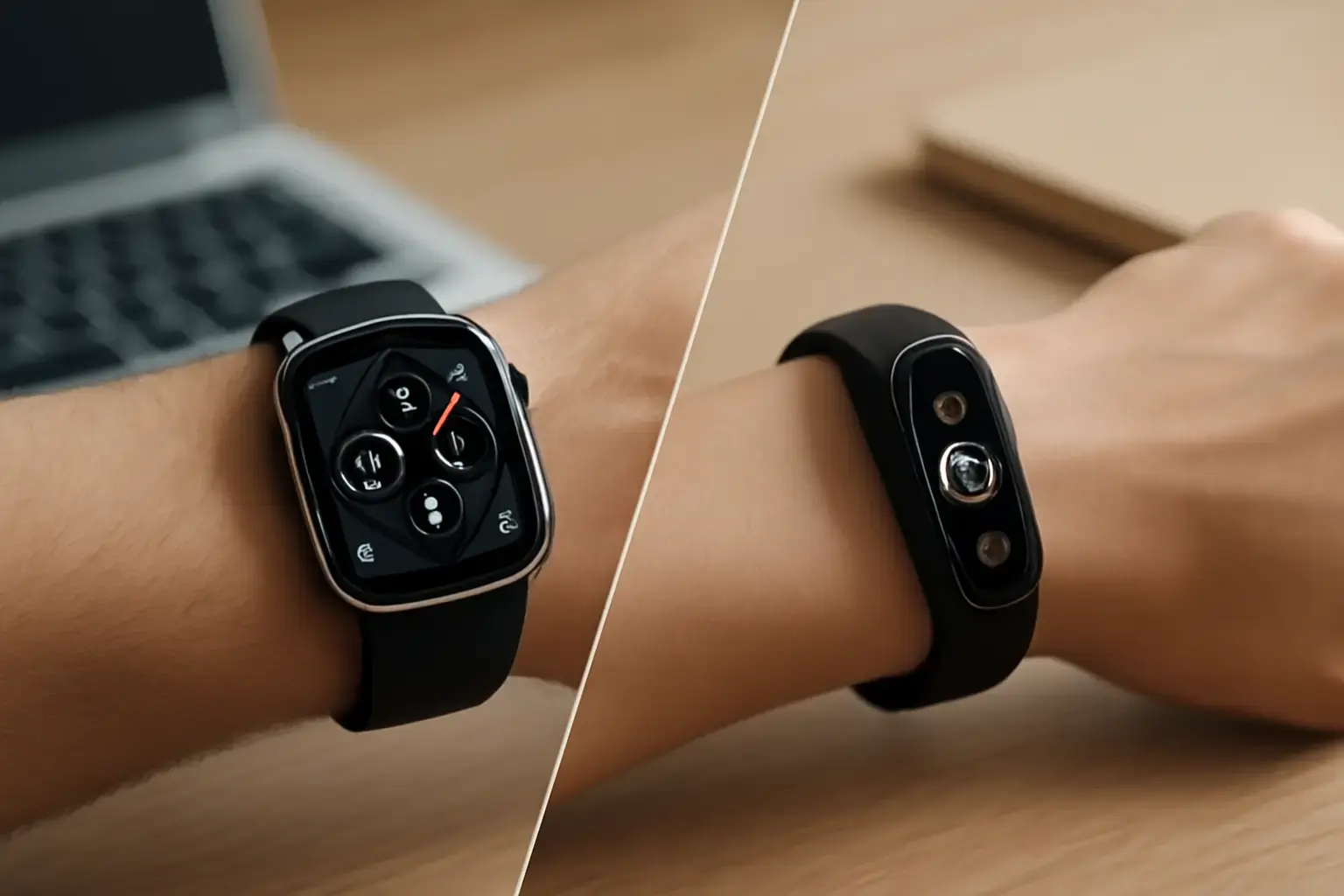
Smartwatch vs Fitness Band: Which One Should You Buy in 2026?
Choosing between a smartwatch vs fitness band isn’t just about comparing specs—it’s about understanding how a device fits into your daily routine. Many buyers make the mistake of focusing on features they rarely use, only to end up with a device that feels unnecessary or even annoying after a few weeks.
Both categories have matured significantly. Smartwatches now offer powerful app ecosystems and productivity tools, while fitness bands have become surprisingly capable at tracking health metrics with minimal effort. The real question isn’t which one is “better,” but which one aligns with your habits, priorities, and tolerance for complexity.
This guide breaks down the differences in a practical, decision-focused way—so you can choose confidently and avoid common buyer regret.
Quick Comparison: Smartwatch vs Fitness Band
| Feature | Smartwatch | Fitness Band |
|---|---|---|
| Functionality | Advanced (apps, calls, integrations) | Focused (health & activity tracking) |
| Battery Life | 1–3 days (frequent charging) | 5–14 days (low maintenance) |
| Display | Large, vibrant, interactive | Compact, simple, glanceable |
| Price | Higher investment | Budget-friendly |
| Best For | Connectivity & productivity | Health tracking & simplicity |
What Is a Smartwatch—and Who Is It Actually For?
A smartwatch is best understood as an extension of your smartphone. It mirrors notifications, enables quick replies, supports apps, and often includes features like GPS, contactless payments, and voice assistants.
But here’s the reality: not everyone benefits equally from these capabilities.
Smartwatches are ideal if you:
- Regularly manage emails, messages, or meetings on the go
- Want to reduce phone usage by handling quick interactions on your wrist
- Rely on integrations like calendars, reminders, or task apps
- Value features like navigation, music control, or payments
Where smartwatches shine in daily life:
- Work productivity: Quickly triaging notifications without pulling out your phone
- Urban convenience: Paying, navigating, or checking updates while commuting
- Connected lifestyle: Seamless integration with apps and services
Trade-offs you shouldn’t ignore:
- Battery anxiety: Daily or near-daily charging becomes part of your routine
- Information overload: Constant notifications can feel distracting rather than helpful
- Cost vs usage: Many users pay for features they rarely use
A common mistake is assuming a smartwatch will automatically improve productivity. In practice, it only helps if you actively engage with its features. Otherwise, it becomes an expensive notification mirror.
What Is a Fitness Band—and Why Many People Prefer It
A fitness band takes the opposite approach: it strips away complexity and focuses on consistent health tracking. Instead of trying to replace your phone, it complements your lifestyle quietly in the background.
Fitness bands are ideal if you:
- Primarily care about steps, sleep, heart rate, and workouts
- Want something lightweight enough to wear 24/7
- Prefer fewer distractions and less screen interaction
- Don’t want to charge your device every day
Where fitness bands excel:
- Consistency: Long battery life encourages continuous wear, improving tracking accuracy
- Comfort: Slim design makes them ideal for sleep tracking and workouts
- Simplicity: No learning curve or feature overload
Limitations to consider:
- No real app ecosystem or advanced functionality
- Limited interaction with notifications
- Smaller screens make detailed data harder to view
Fitness bands often outperform smartwatches in one key area: actual long-term usage. Many users abandon smartwatches after a few months, while fitness bands tend to stay on the wrist because they’re effortless.
Real-World Use Cases: What Actually Matters Day to Day
The difference becomes clearer when you look at real-world scenarios instead of feature lists.
- The office professional: A smartwatch helps manage notifications, calls, and meetings efficiently—especially if you’re frequently away from your desk.
- The casual fitness user: A fitness band tracks activity and sleep without adding unnecessary complexity.
- The minimalist: A fitness band avoids distractions and keeps focus on essentials.
- The tech enthusiast: A smartwatch offers more customization, apps, and experimentation.
- The hybrid user: Some people switch—using a smartwatch during workdays and a fitness band for workouts or weekends.
The key insight: your lifestyle determines value more than the device itself.
Key Buying Factors Most People Overlook
Beyond basic specs, a few practical factors will determine whether you’re happy with your purchase long-term.
- Battery habits: If you already struggle to charge devices regularly, a smartwatch may become frustrating quickly.
- Wearability: A device only works if you wear it consistently. Bulkier smartwatches can be uncomfortable for sleep or workouts.
- Notification tolerance: Some users appreciate constant updates; others find them overwhelming.
- Ecosystem compatibility: Smartwatches often work best within specific phone ecosystems, which can limit flexibility.
- Actual feature usage: Be honest—will you really use apps, calls, or advanced features?
Ignoring these factors is one of the main reasons people regret their purchase.
Common Mistakes to Avoid When Choosing
- Buying for potential, not reality: Don’t choose a smartwatch just because it can do more—choose based on what you will actually use.
- Overvaluing features: More features often mean more complexity and shorter battery life.
- Ignoring comfort: If it’s not comfortable, you won’t wear it consistently.
- Underestimating battery life: Charging frequency has a bigger impact than most buyers expect.
- Following trends: Popular doesn’t always mean practical for your needs.
FAQ: Smartwatch vs Fitness Band
Is a smartwatch better than a fitness band?
Only if you benefit from its advanced features. Otherwise, a fitness band is often the more practical choice.
Do I need a smartwatch for fitness tracking?
No. Fitness bands handle most health tracking needs effectively without extra complexity.
Which is better for battery life?
Fitness bands are significantly better, often lasting several days or even weeks.
Are fitness bands accurate enough?
For general health tracking like steps, heart rate, and sleep, they are reliable for everyday use.
Final Recommendation: Choose Based on Lifestyle, Not Features
The smartwatch vs fitness band decision becomes straightforward when you focus on how you actually live and work.
If your day revolves around communication, scheduling, and staying connected, a smartwatch is the right tool—provided you’re willing to manage battery life and notifications.
If you want something simple, reliable, and focused on health tracking without distractions, a fitness band is often the smarter long-term choice.
For many people, less complexity leads to more consistent use—and that’s ultimately what makes a wearable device valuable.
Choose the device that fits naturally into your routine, not the one with the longest feature list. That’s the difference between something you use for years and something you stop wearing after a month.