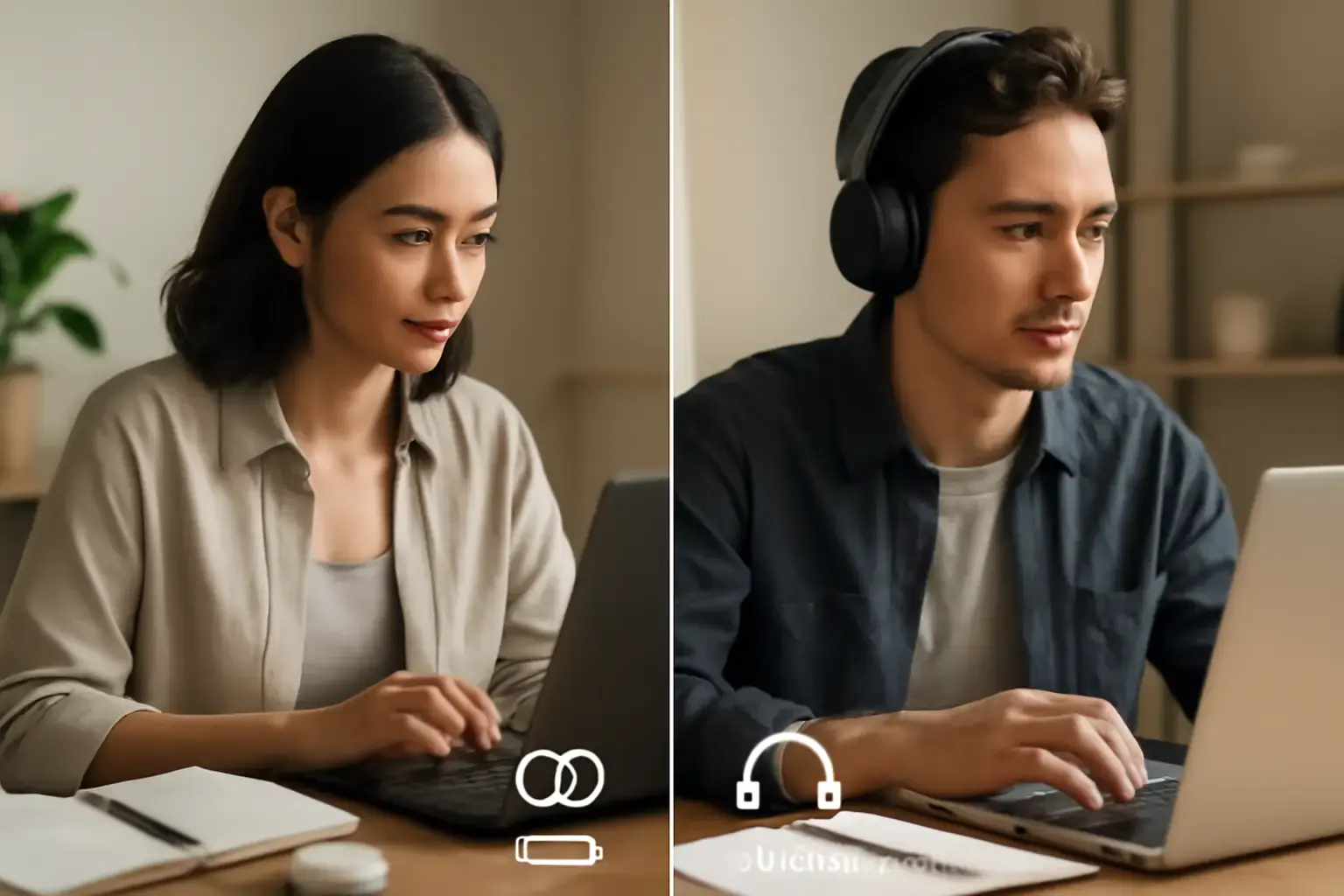
Why Choosing Between Wireless Earbuds and Over-Ear Headphones Matters for Remote Workers
Remote work in 2026 is no longer a temporary trend. Millions of professionals now spend entire workdays attending virtual meetings, collaborating across time zones, managing deep-focus tasks, and switching between workspaces throughout the day. Because of this shift, choosing the right audio gear has become a productivity decision rather than a simple tech preference.
For remote workers, audio devices directly affect concentration, communication quality, physical comfort, and even long-term listening fatigue. The debate between wireless earbuds and over-ear headphones is more important than ever because both categories have evolved dramatically. Premium earbuds now include adaptive noise cancellation, spatial audio, AI-enhanced microphones, and extended battery performance. Meanwhile, modern over-ear headphones have become lighter, smarter, and significantly more comfortable for all-day wear.
Still, the best choice depends on how you actually work. Someone who spends eight hours at a desk taking Zoom calls has completely different needs from a freelancer who works from cafés, co-working spaces, or while traveling.
This guide breaks down the real-world differences between wireless earbuds and over-ear headphones for remote workers in 2026, focusing on comfort, battery life, call quality, portability, productivity, and long-term value.
Comfort Matters More Than Most Remote Workers Realize
Comfort is often underestimated until you begin wearing audio gear for several consecutive hours every day. For remote professionals, discomfort can become a constant distraction that slowly reduces productivity and focus.
Over-ear headphones continue to dominate when it comes to long-session comfort. High-end models in 2026 feature ultra-lightweight frames, breathable memory foam ear cushions, pressure-balanced headbands, and improved heat management. Brands like Sony, Bose, Sennheiser, and Apple have refined ergonomic designs specifically for extended wear during workdays.
Headphones such as the Sony WH-1000XM6, Bose QuietComfort Ultra, and Sennheiser Momentum 5 Wireless are designed to minimize ear fatigue during long calls and focus sessions. Because the ear cups surround the ears instead of sitting inside the ear canal, pressure points are distributed more naturally.
Wireless earbuds have also improved significantly. Modern premium earbuds now include adaptive fit systems, softer silicone materials, venting technology, and multiple ear-tip options that help reduce in-ear pressure. Devices like the Apple AirPods Pro 3, Samsung Galaxy Buds 3 Pro, and Sony WF-1000XM5 are noticeably more comfortable than previous generations.
However, earbuds still create direct contact inside the ear canal. After several hours, many users experience irritation, pressure buildup, or listening fatigue. This becomes especially noticeable during back-to-back meetings or full-day work sessions.
That said, earbuds offer advantages that over-ear headphones cannot match. They are lightweight, easy to carry, and ideal for remote workers who frequently change environments. If you regularly move between rooms, work outdoors, travel often, or prefer minimal desk clutter, earbuds provide unmatched convenience.
Ultimately, if your workday involves long uninterrupted desk sessions, over-ear headphones remain the superior choice for comfort. If flexibility and mobility matter more, wireless earbuds may fit your workflow better.
Battery Life in 2026: The Gap Is Smaller, But Headphones Still Lead
Battery anxiety is one of the most common frustrations for remote workers who depend on wireless audio throughout the day. While battery technology has improved dramatically in 2026, there are still important differences between earbuds and over-ear headphones.
Over-ear headphones continue to offer the best overall battery life. Many flagship models now provide between 30 and 50 hours of continuous playback with active noise cancellation enabled. Some newer models even exceed 60 hours with optimized battery-saving modes.
This matters more than people think. Long battery life means fewer interruptions, less charging management, and greater reliability during critical meetings or extended workdays.
For example:
- Sony WH-1000XM6: approximately 40 hours with ANC enabled
- Bose QuietComfort Ultra: around 35 hours of mixed usage
- Sennheiser Momentum 5 Wireless: close to 60 hours in optimized modes
- Apple AirPods Max 2: improved battery efficiency with around 30 hours of use
Wireless earbuds have improved considerably but still operate within smaller physical limitations. Most premium earbuds now provide between 6 and 10 hours of continuous playback with ANC activated. Charging cases extend total runtime significantly, often delivering 24–40 hours combined.
The Sony WF-1000XM5, for example, offers approximately 8 hours with ANC on, plus extra charges from the case. Apple AirPods Pro 3 and Samsung Galaxy Buds 3 Pro offer similar real-world performance.
Related reading: Best Noise-Canceling Headphones for Office Workers on a Tight Budget in 2026: Smart Picks That Don’t Sacrifice Quality
Where earbuds truly shine is charging speed and convenience. Fast-charging technology has become extremely efficient. In many cases, 10 minutes of charging can provide several hours of playback or enough battery to finish important meetings.
For remote workers who spend most of the day near chargers, earbuds can easily handle daily demands. But for professionals who prefer uninterrupted use without constantly checking battery levels, over-ear headphones still offer the safer and more dependable solution.
Noise Cancellation and Focus: A Huge Productivity Factor
One of the biggest challenges of remote work is managing distractions. Household noise, traffic, conversations, construction, pets, and even noisy neighbors can destroy concentration during deep work sessions.
This is where over-ear headphones maintain a clear advantage.
The larger physical design naturally creates better passive noise isolation, while advanced active noise cancellation systems perform more effectively due to larger microphones and processing hardware. Premium over-ear models can dramatically reduce low-frequency sounds like air conditioners, traffic, or background office chatter.
In 2026, the Bose QuietComfort Ultra and Sony WH-1000XM6 continue to lead the market in ANC performance for productivity-focused users. Their adaptive AI-powered cancellation systems automatically adjust based on environmental noise levels.
Wireless earbuds have become surprisingly competitive in this area. Premium earbuds now include intelligent ANC modes, adaptive transparency systems, and real-time environmental analysis. For casual office environments or coffee shops, many users may find modern earbuds more than sufficient.
Still, earbuds often struggle with:
- Wind interference during outdoor calls
- Consistent passive isolation
- Long-duration ANC performance
- Physical seal variations between users
If maintaining deep focus is critical to your work, over-ear headphones generally create a more immersive and distraction-free environment.
Call Quality and Microphone Performance for Meetings
Remote workers spend a significant portion of their day on video calls, team meetings, interviews, presentations, and client discussions. Because of this, microphone quality matters just as much as speaker quality.
Over-ear headphones usually perform better for professional communication because they have more physical space for advanced microphone arrays and AI voice processing systems.
Modern premium headphones now include:
- Beamforming microphones
- AI voice isolation
- Background noise suppression
- Wind resistance algorithms
- Voice enhancement during conferencing
This allows your voice to remain clear even in noisy environments.
Wireless earbuds have improved massively in call quality over the last few years. High-end models from Apple, Samsung, Sony, and Jabra now offer surprisingly clear microphones for daily meetings.
However, earbuds remain more vulnerable to:
- Wind distortion outdoors
- Fit-related microphone inconsistencies
- Reduced vocal depth compared to larger microphones
- Environmental interference in busy locations
If your job depends heavily on professional communication, presentations, consulting, customer support, or sales calls, over-ear headphones still provide the more polished conferencing experience overall.
Portability and Flexibility: Where Earbuds Dominate
Despite the advantages of over-ear headphones, wireless earbuds remain incredibly popular among remote workers for one simple reason: convenience.
Earbuds fit into pockets, small bags, and travel cases effortlessly. They are ideal for people who:
- Travel frequently
- Work from cafés or co-working spaces
- Move around during calls
- Prefer minimalist setups
- Exercise between work sessions
- Switch between devices constantly
Modern earbuds also offer excellent multi-device pairing, making it easy to transition between smartphones, tablets, and laptops.
Over-ear headphones are less portable by nature. Even foldable designs occupy significantly more space. They can also become inconvenient during commuting or outdoor movement.
For highly mobile professionals, portability alone may justify choosing earbuds despite their shorter battery life.
Common Mistakes Remote Workers Make When Buying Audio Gear
- Prioritizing specs instead of real usage: Marketing numbers rarely reflect actual workday experiences.
- Ignoring long-term comfort: A device that feels fine for 20 minutes may become painful after four hours.
- Choosing based only on sound quality: Productivity depends more on comfort, battery life, and microphone clarity.
- Underestimating microphone importance: Poor call quality can negatively affect professionalism and communication.
- Forgetting ecosystem compatibility: Device switching and software integration matter greatly for remote work.
- Buying outdated models: Many older headphones lack the AI-enhanced features and battery optimizations common in 2026.
- Ignoring repairability and durability: Cheap hinges, poor battery longevity, and weak build quality become expensive over time.
Practical Recommendations: Which Option Fits Your Workflow?
Choose Wireless Earbuds if you:
See also: Best Wireless Keyboards for Hybrid Work and Long Battery Life in 2026 ⌨️
- Work in multiple locations throughout the day
- Prefer lightweight and portable gear
- Take shorter meetings and moderate work sessions
- Want fast charging convenience
- Need flexibility during travel or commuting
- Value transparency modes for environmental awareness
- Prefer minimal desk clutter and compact accessories
Choose Over-Ear Headphones if you:
- Spend long hours at a desk
- Attend frequent virtual meetings
- Need maximum comfort during all-day wear
- Require stronger noise cancellation
- Prefer extended battery life without interruptions
- Need superior microphone clarity for professional calls
- Work in noisy home environments
- Prioritize immersive focus and concentration
Best 2026 Audio Picks for Remote Workers
Some of the strongest wireless earbuds for remote work in 2026 include:
- Apple AirPods Pro 3
- Sony WF-1000XM5
- Samsung Galaxy Buds 3 Pro
- Jabra Elite 11 Active
- Bose QuietComfort Ultra Earbuds
Top over-ear headphones for productivity and remote work include:
- Sony WH-1000XM6
- Bose QuietComfort Ultra
- Sennheiser Momentum 5 Wireless
- Apple AirPods Max 2
- Jabra Evolve2 85
These models remain highly recommended in 2026 due to their combination of battery life, comfort, ANC quality, microphone performance, and long-term reliability.
Where to Learn More and Find Smart Picks
For anyone considering budget-friendly options balancing battery life and clear calls, this guide on budget Bluetooth headphones for students offers useful insights applicable to remote workers.
If noise-canceling quality and comfort during commutes intersect with remote work needs, check our best noise-canceling headphones for commuters in 2026 review.
And for those still on the fence about switching from speakers to headphones in a home office, this comparison guide covers key audio environment considerations.
Final Recommendation: Comfort and Reliable Battery Life Should Drive Your Choice
In 2026, both wireless earbuds and over-ear headphones are powerful enough to support modern remote work. The better option depends entirely on how you work, where you work, and how long you wear your audio gear each day.
Over-ear headphones remain the strongest overall choice for remote professionals who prioritize long-term comfort, extended battery life, deep focus, and premium call quality. They are especially valuable for workers spending entire days in meetings or concentration-heavy tasks.
Wireless earbuds excel for flexible professionals who value portability, fast charging, convenience, and lightweight mobility. They are ideal for hybrid lifestyles that blend work, travel, commuting, and movement throughout the day.
Rather than chasing hype, flashy marketing, or unnecessary features, remote workers should focus on practical factors that genuinely improve productivity: comfort, microphone quality, battery reliability, ecosystem compatibility, and distraction reduction.
The best audio device is the one that disappears into your workflow and helps you stay productive without constantly thinking about it.