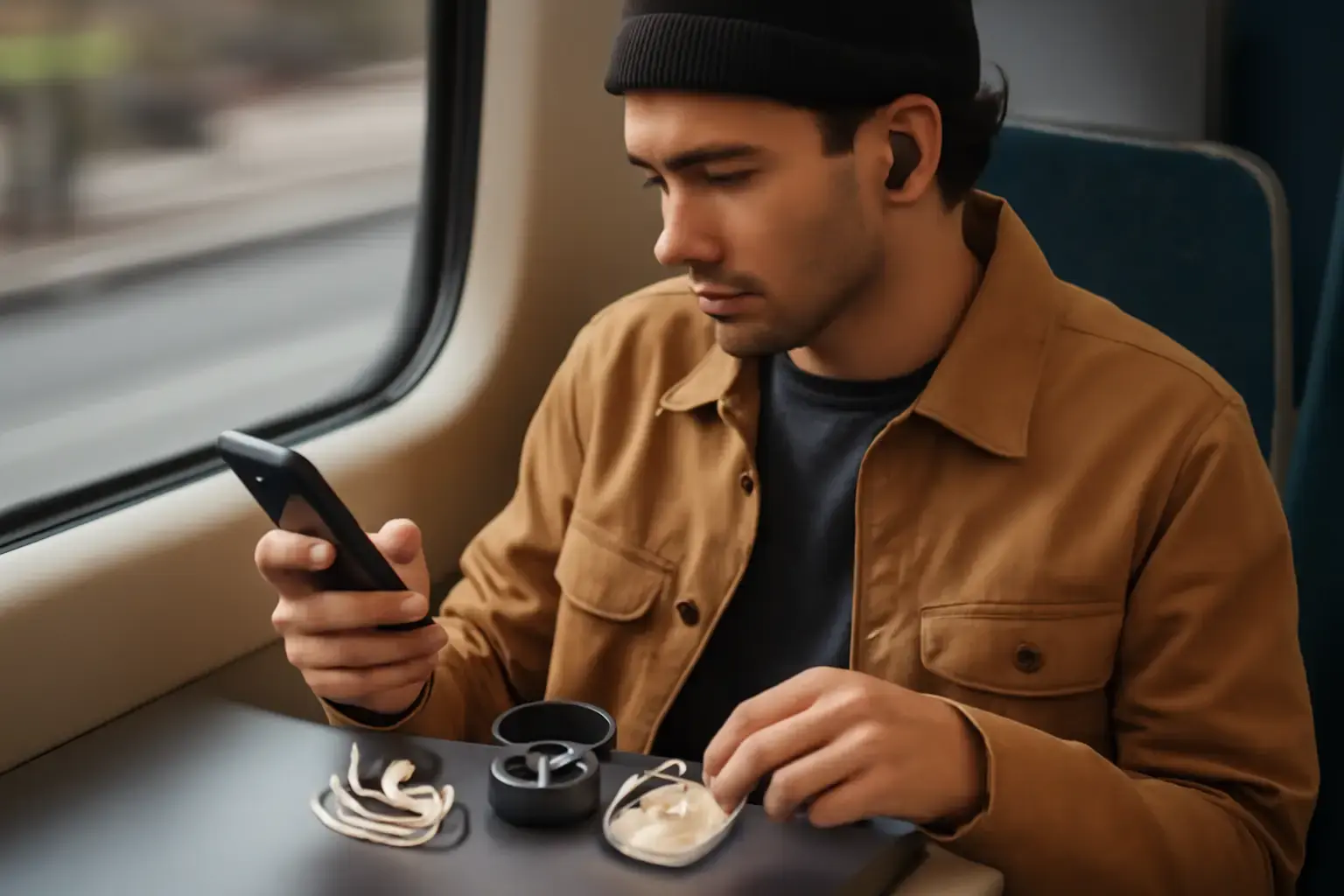
Battery Anxiety Is the Real Travel Audio Problem in 2026
In 2026, battery anxiety has become one of the biggest hidden frustrations for travelers using modern audio gear. Whether you are navigating long-haul flights, train delays, crowded airports, or remote destinations with limited charging access, the fear of your earbuds dying at the wrong moment can quickly ruin the convenience that wireless audio promises.
While current-generation wireless earbuds are smarter, lighter, and more feature-packed than ever, they still depend entirely on battery management. Wired earphones avoid that issue completely, but they introduce their own compromises involving cables, adapters, and portability. Choosing between the two is no longer just about sound quality—it is about reliability, comfort, convenience, and how you actually travel.
If you regularly deal with long travel days, unpredictable charging opportunities, or heavy daily audio use, understanding the strengths and limitations of both options will help you avoid expensive mistakes and choose travel audio gear that remains dependable throughout 2026 and beyond.
Why Wireless Earbuds Continue to Dominate Travel in 2026
Wireless earbuds remain the default choice for many travelers because they offer unmatched portability and convenience. Premium models from Apple, Sony, Bose, Samsung, Technics, and Sennheiser now deliver features that were previously limited to full-size headphones, including adaptive active noise cancellation, spatial audio, intelligent transparency modes, multipoint connectivity, and AI-enhanced call quality.
For travelers, the biggest advantage is freedom. No tangled cables, no snagging on airplane armrests, and no complicated setup when moving between smartphones, tablets, and laptops. Modern earbuds also fit easily into pockets or small travel organizers, making them ideal for minimal carry-on setups.
Current flagship wireless earbuds in 2026 commonly offer:
- 6–12 hours of playback per charge depending on ANC usage
- 24–40 hours total battery life with charging cases
- Fast charging that delivers 1–3 hours of playback in minutes
- Improved Bluetooth stability in crowded environments
- Better microphone quality for calls during travel
- Advanced noise cancellation for airplanes and trains
Despite these improvements, battery anxiety still exists because real-world travel conditions are unpredictable. Long delays, overnight layovers, missed connections, and heavy ANC usage can drain earbuds much faster than expected. Many travelers discover that advertised battery figures rarely match actual use during noisy trips with constant connectivity switching.
Related reading: How to Choose Between External Speakers and Headphones for Home Office Audio in 2026
Another issue is dependency on charging accessories. Wireless earbuds are only truly convenient if you consistently carry:
- The charging case
- A compatible charging cable
- A power bank for long trips
- Possibly wireless charging accessories
Lose or forget one component, and the entire setup becomes unreliable.
Bluetooth performance has also improved significantly, but busy airports, crowded public transport hubs, and older in-flight entertainment systems can still create pairing frustrations, latency issues, or intermittent signal drops. Travelers who rely heavily on stable uninterrupted playback should not ignore these real-world limitations.
Wired Earphones Still Offer Reliability That Wireless Audio Cannot Match
While wired earphones may seem old-fashioned in 2026, they continue to solve one problem better than anything else: they simply work. As long as your phone, tablet, laptop, or audio adapter has power, wired earphones remain operational without needing recharging, syncing, firmware updates, or battery management.
For travelers who experience battery anxiety frequently, this reliability can be incredibly valuable during long journeys. There is no need to monitor battery percentages, conserve playback time, or worry about ANC draining power during critical moments.
Modern wired earphones have also evolved considerably. Many current models now include:
- USB-C digital audio support
- High-resolution DAC integration
- Inline microphones and controls
- Improved cable durability
- Detachable or replaceable cables
- Excellent passive noise isolation
Some wired in-ear monitors and premium travel earphones now compete directly with wireless models in sound quality while remaining lighter and more affordable.
See also: Best Budget Audio Gear for Podcast Hosts in 2026: Comparing Microphones and Headphones That Deliver
However, wired audio is no longer universally convenient because many modern devices continue removing traditional headphone jacks. Depending on your device ecosystem, you may need:
- USB-C adapters
- Lightning adapters
- DAC dongles
- Splitters for charging and listening simultaneously
These extra accessories can create their own travel frustrations. Cheap adapters also fail frequently, especially during heavy travel use.
Cables remain another downside. Even high-quality braided cables can tangle in bags, snag on seats, or wear out after repeated packing and unpacking. Travelers who move constantly between devices often find wired setups less flexible than wireless alternatives.
How Battery Anxiety Changes the Buying Decision
Many travelers assume battery anxiety only affects people taking extremely long trips, but that is no longer true in 2026. Heavy audio usage throughout the day can drain wireless earbuds surprisingly quickly.
Battery anxiety becomes more noticeable if you:
- Use ANC continuously during flights
- Attend long remote meetings while traveling
- Listen to music for 8+ hours daily
- Forget to recharge devices regularly
- Travel through areas with limited power access
- Use older power banks or slow chargers
- Switch frequently between devices
Travelers with anxiety around battery management often enjoy trips more when they remove one more charging responsibility from their daily routine. In those cases, wired earphones may actually improve the overall travel experience despite seeming less modern.
On the other hand, travelers who already carry organized charging kits and regularly recharge devices may find wireless earbuds dramatically more convenient and comfortable.
Important Factors to Consider Before Buying Travel Earphones in 2026
Trip Length and Charging Availability
Your travel style matters more than marketing claims. Short business trips with hotels, lounges, and easy charging access favor wireless earbuds. Multi-day transit schedules, backpacking, camping, or remote travel often favor wired reliability.
If your travel frequently includes:
- Long international flights
- Overnight train journeys
- Remote destinations
- Limited outlet access
- Heavy daily media consumption
then battery management should become a major part of your decision.
Noise Cancellation Performance
Wireless earbuds dominate when it comes to active noise cancellation. Premium ANC earbuds in 2026 can dramatically reduce airplane engine noise, train rumble, and airport chatter, helping reduce listening fatigue during long journeys.
Wired earphones rely mostly on passive isolation unless paired with specialized external hardware. While passive isolation can still work well, it rarely matches the effectiveness of premium ANC systems during travel.
Comfort During Long Sessions
Comfort is often underestimated until travelers spend 10–15 hours wearing audio gear continuously. Lightweight wireless earbuds generally feel less restrictive because there are no cables pulling during movement.
However, some users find wired earphones more comfortable over long periods because they avoid battery heat buildup and sometimes provide more stable fit options.
Always test:
- Ear pressure during extended wear
- Stability while walking
- Fatigue after several hours
- Comfort while sleeping during flights
Device Compatibility
Compatibility problems still affect both wired and wireless audio in 2026.
Wireless earbuds may struggle with:
- Older Bluetooth devices
- In-flight entertainment systems
- Certain gaming handhelds
- Codec compatibility limitations
Wired earphones may require:
- USB-C audio support
- Lightning compatibility
- DAC adapters
- 3.5mm conversion accessories
Before buying, evaluate every device you travel with regularly—not just your smartphone.
Common Mistakes Travelers Make When Buying Earphones in 2026
- Trusting advertised battery life too much: Battery estimates are often measured under ideal conditions. High volume, ANC usage, and frequent calls reduce real-world endurance significantly.
- Ignoring charging speed: Fast charging can matter more than total battery life during short airport layovers.
- Choosing uncomfortable earbuds for long flights: Many earbuds feel fine for one hour but become painful during overnight travel.
- Buying wired earphones without checking port compatibility: Adapter dependency creates unnecessary complexity while traveling.
- Overlooking case size: Some premium wireless earbud cases are surprisingly bulky for pocket travel.
- Assuming all ANC systems perform equally: Noise cancellation quality varies dramatically between brands and price ranges.
- Skipping backup solutions: Travelers who rely entirely on one audio device often regret it during emergencies.
Best Travel Audio Strategy for Most Travelers in 2026
For many experienced travelers, the smartest approach in 2026 is not choosing one or the other exclusively—it is combining both.
You may also like: Best Current-Gen Noise-Canceling Headphones for Commuters Facing Long Daily Public Transport Hours in 2026
A hybrid setup gives you flexibility without fully depending on battery-powered gear.
- Choose wireless earbuds if: You prioritize portability, active noise cancellation, cable-free convenience, and seamless switching between multiple modern devices. Wireless earbuds are ideal for travelers with reliable charging habits and access to power throughout their journey.
- Choose wired earphones if: You regularly experience battery anxiety, travel long distances without dependable charging access, prefer maximum reliability, or simply want the least complicated audio setup possible.
- Choose a hybrid setup if: You want the best balance between convenience and reliability. Many frequent travelers now carry premium wireless earbuds for daily use alongside compact wired earphones as an emergency backup.
Which Option Is Better for Long-Term Travel Reliability?
If your top priority is peace of mind, wired earphones still remain unmatched in 2026 because they eliminate an entire category of problems related to charging, battery degradation, and wireless connectivity.
However, if your priority is comfort, portability, noise cancellation, and modern convenience, current-generation wireless earbuds provide a significantly better overall experience for most travelers—provided you manage charging responsibly.
The right decision ultimately depends on how much battery management stress affects your travel experience. Some travelers barely notice it. Others find it exhausting after repeated long trips.
Before your next journey, honestly evaluate:
- How often you forget charging devices
- How long your average travel days are
- Whether you regularly carry power banks
- Your tolerance for cables and adapters
- The importance of ANC during travel
- How many devices you switch between daily
Answering these questions realistically will help you choose travel audio gear that remains reliable long after the excitement of buying new tech fades.
For more on headphone choices and battery management, check out Wireless Earbuds vs Over-Ear Headphones for Remote Workers in 2026 and Top Noise-Canceling Headphones for Commuters in 2026.
One of the most effective ways to evaluate How to Choose Between Current-Gen Wireless Earbuds and Wired Earphones for Travel With Battery Anxiety in 2026 is to focus on long-term real-world usage rather than short first impressions. Audio gear that feels convenient during a quick test can become frustrating after repeated flights, charging cycles, and daily travel routines. The best travel earphones are the ones that continue performing reliably when your schedule becomes unpredictable.