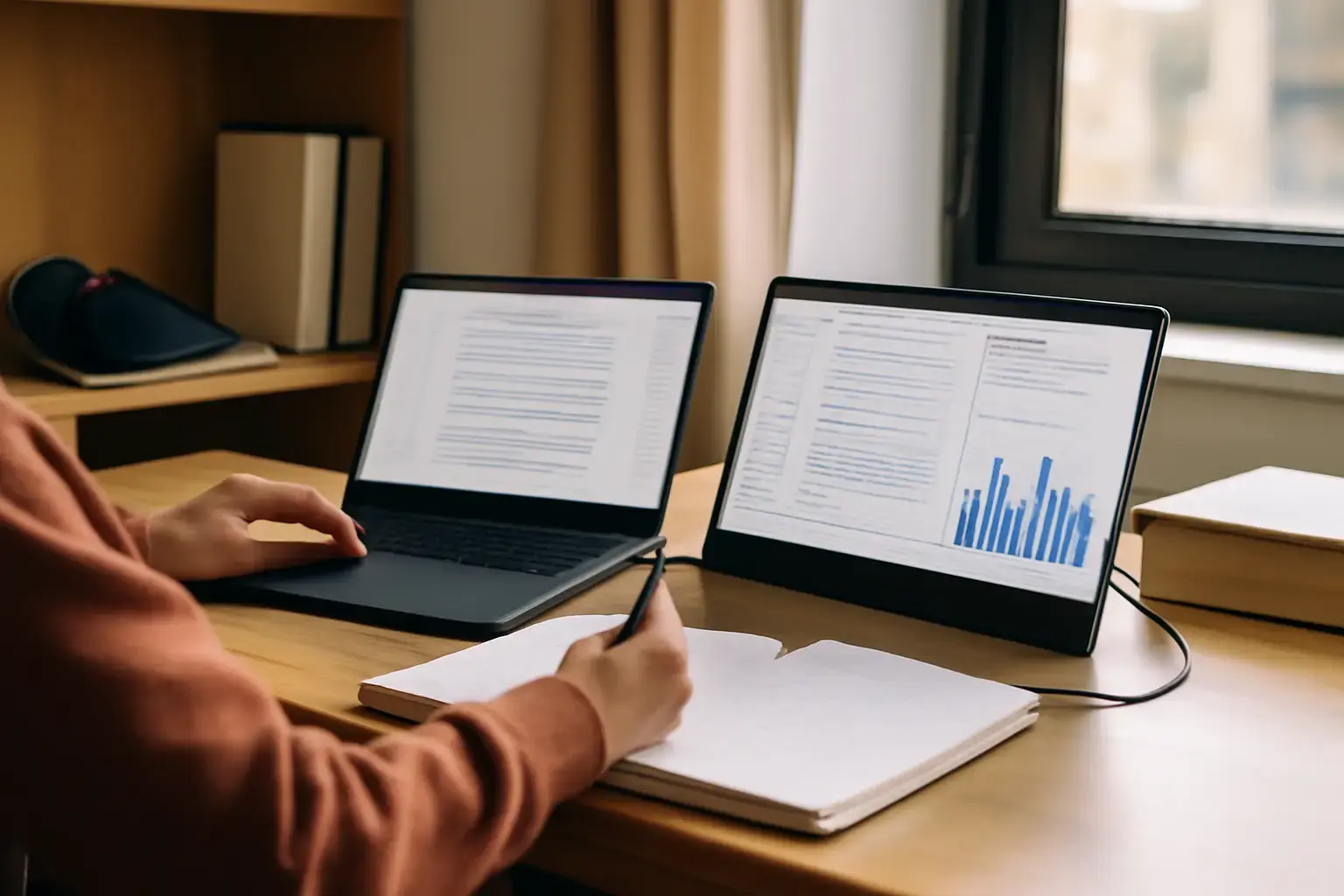
For students balancing demanding coursework, remote lectures, research tabs, productivity apps, and entertainment, adding a portable second display can completely transform the study experience. In 2026, modern laptops are thinner and more efficient than ever, but many still come with limited screen space that quickly feels restrictive during multitasking. A high-quality portable monitor solves that problem without forcing students to spend hundreds on a full desktop setup.
However, finding the best portable monitor under $300 is harder than it looks. Many low-cost models sacrifice brightness, panel quality, durability, or USB-C compatibility. Others advertise premium features but struggle with real-world student use, especially in libraries, dorm rooms, cafés, or classrooms. Choosing the right model means focusing on portability, display quality, reliable connectivity, and long-term value rather than flashy marketing specs.
Why Portable Monitors Have Become Essential for Students in 2026
Today’s students rarely work in a single application. A typical study session may involve Zoom or Microsoft Teams lectures on one screen while note-taking apps, PDFs, Google Docs, coding environments, spreadsheets, or research browsers stay open on another. Constantly switching between windows on a small laptop display slows productivity and increases mental fatigue.
A portable monitor creates dedicated workspace for multitasking without requiring a bulky desktop monitor. Students can keep lecture slides visible while writing assignments, compare research sources side-by-side, edit videos more comfortably, or manage coding projects with improved workflow efficiency.
Portable displays are also useful beyond academics. Many students use them for streaming Netflix, casual gaming, creative work, video editing, or even extending tablet screens during travel. The flexibility alone makes them one of the most practical productivity upgrades for college and university life.
Related reading: Best Current-Gen Noise-Canceling Headphones for Office Workers Needing Focus in Open Plan Spaces on a Budget
What to Look for in the Best Portable Monitor Under $300
Students shopping on a budget should avoid focusing only on raw specifications. Real-world usability matters far more than marketing numbers. The best portable monitors for students in 2026 combine practical portability with dependable performance.
- Display size and resolution: A 14-inch to 16-inch Full HD IPS display remains the ideal balance between readability and portability. Full HD (1920×1080) is still perfectly sharp for studying, streaming, browsing, and multitasking without draining laptop battery excessively.
- IPS panel quality: IPS technology offers better color accuracy and viewing angles than cheaper TN panels. This improves readability for long study sessions and delivers better visuals for entertainment or creative work.
- Weight and portability: Students carrying laptops, books, chargers, and accessories daily should prioritize lightweight monitors under 1.5 pounds whenever possible.
- USB-C connectivity: USB-C with DisplayPort Alternate Mode support is now essential. A single-cable setup simplifies portability and reduces cable clutter in classrooms and cafés.
- Brightness and anti-glare coating: Brightness matters more than many students realize. Dim displays become difficult to use in bright libraries or near windows. Anti-glare screens significantly improve visibility.
- Stand quality and ergonomics: Weak kickstands or unstable folding covers become frustrating quickly. Adjustable viewing angles improve posture and reduce neck strain during long study sessions.
- Battery support: Built-in batteries are convenient for true mobile use, though many excellent monitors rely on laptop power instead. Students mostly studying near outlets may not need battery-powered models.
Best Current-Gen Portable Monitors Under $300 for Students in 2026
After comparing real-world usability, portability, screen quality, connectivity, and long-term reliability, these portable monitors stand out as the strongest student-friendly options this year.
1. ASUS ZenScreen Go MB16AHP
The ASUS ZenScreen Go MB16AHP remains one of the most versatile portable monitors available under $300 thanks to its built-in battery, reliable USB-C support, and strong portability features.
This 15.6-inch Full HD IPS monitor includes an integrated battery that allows temporary untethered use away from wall outlets. That feature is especially valuable for students moving between lectures, study halls, libraries, and cafés throughout the day. Instead of draining the laptop aggressively, the monitor can power itself during shorter sessions.
The display offers solid color reproduction, wide viewing angles, and respectable brightness for indoor use. ASUS also includes an adjustable smart cover stand and automatic screen rotation support for portrait mode productivity.
Another major advantage is touchscreen compatibility on supported devices, which benefits interactive note-taking apps and hybrid tablet workflows.
Best for: Students who prioritize mobility and battery-powered flexibility.
Pros:
- Built-in battery for true portability
- Reliable USB-C connectivity
- Good IPS color quality
- Portable and travel-friendly design
- Auto-rotation support
Cons:
- Slightly heavier than ultra-light competitors
- Brightness is decent but not class-leading
2. Lenovo ThinkVision M14 Gen 2
The Lenovo ThinkVision M14 Gen 2 is arguably the best lightweight portable monitor for students who value portability above everything else.
Weighing roughly 1.3 pounds, this 14-inch Full HD IPS display slips easily into backpacks without adding noticeable bulk. Despite the slim profile, Lenovo delivers excellent build quality and one of the most stable integrated stands in this price category.
Color accuracy and brightness are surprisingly strong for the price, making the M14 Gen 2 excellent not only for schoolwork but also for media consumption, light creative editing, and extended reading sessions.
The dual USB-C ports simplify cable management and improve flexibility when charging laptops simultaneously.
Unlike the ASUS model, the ThinkVision M14 does not include an internal battery. It relies entirely on connected power from a laptop or external charger. For students mostly studying indoors near outlets, this trade-off is usually worth it because of the monitor’s lightweight design.
Best for: Students who want maximum portability with premium build quality.
Pros:
- Extremely lightweight and slim
- Excellent portability for campus use
- Strong brightness and color accuracy
- Reliable USB-C implementation
- Premium stand stability
Cons:
- No built-in battery
- Smaller screen than some 15.6-inch competitors
3. ViewSonic VG1655
The ViewSonic VG1655 delivers one of the best value balances for students who need dependable multitasking space without overspending.
Its 15.6-inch IPS panel provides comfortable screen real estate for research, essay writing, coding, spreadsheets, and video streaming. The monitor includes USB-C connectivity, decent brightness, integrated speakers, and a flexible foldable stand suitable for everyday classroom and dorm use.
Although slightly thicker and heavier than the Lenovo alternative, the VG1655 compensates with strong display consistency and dependable overall usability.
Students who mainly work from dorm rooms, libraries, or study spaces with nearby power outlets will likely find this model more than sufficient.
Best for: Students seeking balanced performance and affordability.
Pros:
- Excellent value for the price
- Comfortable 15.6-inch display size
- Reliable USB-C connectivity
- Good screen uniformity
- Solid all-around performance
Cons:
- Slightly bulkier than premium lightweight models
- Average integrated speakers
Common Mistakes Students Make When Buying Portable Monitors
Even in 2026, many students still end up disappointed because they overlook practical compatibility and usability issues. Avoiding these common mistakes can save both money and frustration.
- Assuming every USB-C port supports video output: Many laptops and tablets include USB-C charging ports that do not support DisplayPort Alternate Mode. Always verify compatibility before buying.
- Buying oversized monitors for portability: Larger displays may sound appealing, but carrying bulky screens daily becomes exhausting for commuters and students moving between classes.
- Ignoring brightness ratings: Cheap portable monitors often struggle in bright rooms or near windows. A dim screen reduces readability and causes eye strain.
- Choosing unknown brands solely to save money: Generic low-cost displays frequently suffer from weak hinges, unreliable USB-C implementations, dead pixels, and poor warranty support.
- Overlooking stand quality: An unstable stand creates constant wobble on small desks, especially in classrooms or coffee shops.
Best Ways Students Can Use Portable Monitors Effectively
Owning a second screen is only part of the equation. Proper setup dramatically improves comfort and productivity.
- Position the monitor near eye level to reduce neck strain during long sessions.
- Use Windows Snap Assist or macOS Stage Manager to organize applications efficiently across both screens.
- Keep lectures or research PDFs on the portable monitor while writing assignments on the primary laptop screen.
- Pair the setup with a compact wireless keyboard and mouse for better ergonomics in dorm rooms or libraries.
- Store charging cables and adapters in a dedicated tech pouch to simplify travel between classes.
- Enable blue light reduction settings during late-night study sessions to reduce eye fatigue.
For more on maximizing dual-screen productivity, explore our detailed guide on building a productive dual-monitor desk setup.
See also: Best Tablets Under $400 for Students Balancing School and Entertainment in 2026
Why These Portable Monitors Are Better Than Cheap Generic Alternatives
While dozens of no-name portable monitors exist under $200, many fail to deliver consistent long-term performance. Students often encounter unstable USB-C connectivity, flickering panels, weak brightness, inaccurate colors, unreliable power delivery, or poor customer support.
Established brands like ASUS, Lenovo, and ViewSonic provide far better quality control, firmware stability, warranty coverage, and panel consistency. That reliability matters for students depending on these displays daily for coursework, presentations, online learning, and productivity.
Another major advantage is software and hardware optimization. Reputable brands typically deliver smoother compatibility with Windows laptops, MacBooks, iPads, and modern tablets, reducing setup headaches significantly.
These monitors also maintain better resale value and durability over time, making them smarter long-term investments for students on tighter budgets.
Are Portable Monitors Worth It for Students in 2026?
For most students, the answer is absolutely yes. A portable monitor improves productivity, multitasking efficiency, organization, and comfort far more than many other tech upgrades in the same price range.
Instead of constantly minimizing tabs and switching between applications, students can create cleaner workflows that reduce distractions and save time. Whether studying remotely, coding, editing documents, attending virtual lectures, or simply streaming content during breaks, the additional screen space becomes surprisingly valuable after only a few days of use.
Portable monitors are especially useful for:
- College and university students
- Remote learners
- Programming and computer science students
- Creative design students
- Business and finance majors working with spreadsheets
- Students using tablets as primary study devices
Conclusion: Which Portable Monitor Under $300 Should Students Buy in 2026?
The best portable monitor ultimately depends on how and where you study.
If you need maximum mobility and battery-powered flexibility for studying around campus, the ASUS ZenScreen Go MB16AHP remains one of the smartest portable monitor choices under $300 in 2026.
If ultra-lightweight portability, strong display quality, and premium build matter most, the Lenovo ThinkVision M14 Gen 2 is arguably the best student-friendly portable monitor available today.
Meanwhile, the ViewSonic VG1655 offers one of the strongest value-focused balances for students who want reliable multitasking performance without overspending.
Before purchasing, always verify your laptop or tablet supports USB-C video output through DisplayPort Alternate Mode or Thunderbolt compatibility. That single step prevents the majority of setup frustrations students experience with portable displays.
Combined with accessories like compact keyboards, laptop stands, and productivity software, a good portable monitor can dramatically improve both study efficiency and entertainment experiences throughout college life.
For more student tech recommendations, check out our guides on tablets vs laptops for online learning and the best monitors for coders and writers.