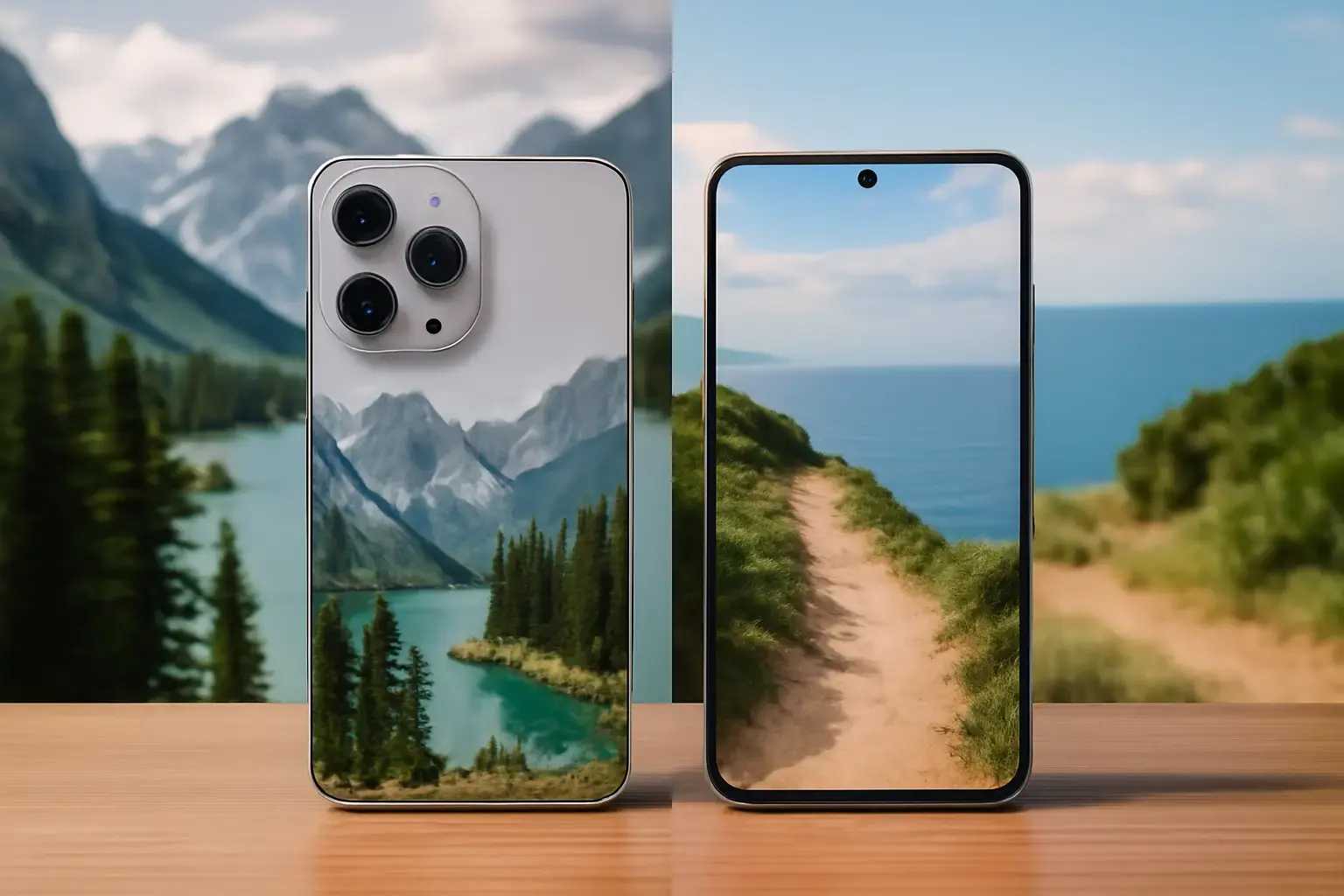
Why Camera and Battery Life Are Critical for Outdoor Travel Phones
When you're exploring remote landscapes or bustling cities, your phone isn’t just a communication device—it’s your primary travel camera, navigator, and lifeline. Two of the most important features for outdoor travelers are a camera capable of capturing stunning photos and videos regardless of conditions, and a battery that won’t quit midway through your adventures. The Apple iPhone 17 Pro and Samsung Galaxy S26+ both target this premium traveler segment, but their approaches differ in ways that impact their usability for outdoor content creators and adventure seekers.
This guide focuses on helping you decide which phone fits your travel style best by comparing their camera systems, battery life, and other key outdoor-use features in practical terms—not just on paper.
Camera Capabilities: Which Phone Captures Your Adventures Best?
iPhone 17 Pro continues Apple’s tradition of excellent computational photography, with a versatile triple-lens setup optimized for accuracy, color fidelity, and video quality. It features a new periscope telephoto lens offering up to 10x optical zoom—unique at this price tier—which is a great asset for capturing wildlife or distant landscapes without sacrificing detail. Apple’s Photonic Engine enhances low-light images significantly, which is a boon for outdoor travelers shooting at dawn, dusk, or under forest canopies.
Samsung Galaxy S26+
Related reading: Samsung Galaxy Z Fold 9 vs Apple iPhone Fold 2026: Which Foldable Smartphone Offers the Best Daily Productivity?
Real-World Use Considerations: Apple’s images tend to maintain more natural tones straight out of the camera, requiring less editing. Samsung’s higher megapixel count and aggressive AI boost make its photos pop on social media but sometimes at the expense of subtlety. For travelers who want pro-level image control with the option for raw capture, the iPhone 17 Pro’s ProRAW is a significant advantage. Meanwhile, if you often shoot faraway wildlife or landscapes and want maximum zoom clarity, the Galaxy S26+ pulls ahead.
Battery Life and Outdoor Reliability
Battery life is a make-or-break feature for travelers far from power outlets. Both phones offer improvements over their predecessors but differ in battery capacity and charging features.
The Samsung Galaxy S26+ includes a larger 4700mAh battery (approximate standard), supporting 45W wired fast charging and 25W wireless charging. This means you can top up quickly during short breaks, and Wireless PowerShare lets you charge compatible accessories or even a friend's phone.
Samsung Galaxy S26+ Battery Life in Real Travel Use: In practical outdoor scenarios, the S26+ is designed to handle intensive usage patterns such as continuous GPS navigation, 5G connectivity, 4K/8K video recording, and high screen brightness under sunlight. On a full charge, users can typically expect a full day of heavy mixed use, including photography, navigation, and social media uploads. The combination of its larger battery and adaptive power management allows it to sustain long travel days, while fast charging ensures that even short stops—like a coffee break—can restore a significant percentage of battery life quickly. This makes it particularly reliable for travelers who rely heavily on their phone throughout the day without frequent access to charging points.
The iPhone 17 Pro houses a smaller battery capacity (around 4500mAh), but Apple’s chipset and iOS optimizations deliver highly efficient power management. It supports 30W fast charging and 15W MagSafe wireless charging. While the wired charging is slower on paper, the iPhone’s energy efficiency and intelligent background task handling often translate into similar or better real-world endurance compared to Samsung’s larger battery.
See also: How to Choose a Phone with Great Camera Performance for Social Media Content Creators Under $700
Outdoor Use Factors: Samsung’s higher-capacity battery and fast charging are advantageous if you heavily use power-hungry features like GPS navigation, 5G data, and high-brightness screen outdoors. On the other hand, iPhone’s consistency and optimized software reduce background drain, which can be critical on multi-day hikes or trips with limited charging access.
Durability, Display, and Other Travel Considerations
Durability: Both phones offer IP68 water and dust resistance, a necessity for outdoor use. However, the iPhone 17 Pro’s Ceramic Shield front cover and robust build slightly edge Samsung for drop protection.
Display: Samsung’s 6.8-inch AMOLED screen on the S26+ is marginally larger and brighter, with deeper blacks—ideal for viewing maps or photos in bright sunlight. Apple offers a high-brightness, color-accurate 6.1-inch OLED display with ProMotion up to 120Hz, favoring smoother scrolling and animations.
Software Ecosystem: iPhone’s seamless integration with services like iCloud, and apps optimized for travel photography editing, can simplify your workflow. Samsung runs Android with the One UI skin, offering more customization and flexibility, including useful features like DeX mode for connecting to external displays, which might appeal to tech-savvy travelers who double as remote workers.
You may also like: iPhone vs Android for Everyday Users in 2026: Which Should You Choose?
Who Should Choose Which Phone for Outdoor Travel?
Here’s a straightforward breakdown to help you decide:
- Choose iPhone 17 Pro if you want: Natural photo colors with ProRAW editing flexibility, reliable battery life optimized for all-day use, better drop protection, and a polished software ecosystem focused on creative content workflows.
- Choose Samsung Galaxy S26+ if you want: Highest megapixel detail for cropping and zooming, longer optical zoom range, brighter and larger display for outdoor viewing, faster wired charging, and more battery capacity for heavy screen time.
- Avoid iPhone 17 Pro if: You need the highest zoom levels or prefer a larger display for navigation and media.
- Avoid Galaxy S26+ if: You dislike oversaturated photos and want a phone with simpler, more consistent image processing.
Practical Tips for Maximizing Camera and Battery on Your Travel Phone
- Use Manual Camera Controls: Both phones support manual exposure and focus; mastering these can vastly improve photos in tricky lighting.
- Enable Battery Saver Modes Wisely: Use Samsung’s adaptive power saving or iPhone’s Low Power Mode during long days without charging.
- Carry a Compact Power Bank: For extended outdoor trips, a high-capacity USB-C power bank compatible with fast charging is essential to keep your phone topped up.
- Optimize Screen Brightness: Lower brightness or use auto-brightness to conserve battery while preserving visibility outdoors.
- Back Up Photos Regularly: Use cloud services or offline backups to avoid losing precious memories if your phone is lost or damaged.
For more detailed analysis on travel phone cameras, see our comparison between the Samsung Galaxy S26 Ultra and Google Pixel 8 Pro here. If you want to explore the broader ecosystem differences affecting your travel productivity, check our ecosystem comparison guide.
Final Recommendation
For travelers prioritizing the very best in-camera flexibility with natural tones and stable battery life, the iPhone 17 Pro remains the top choice. Its balanced approach is ideal for photographers and creators who value consistent results without juggling complicated settings, alongside a dependable battery that lasts through long days.
However, if you want the absolute maximum in zoom capabilities, a brighter display for sunlight viewing, and faster charging to quickly power back up after battery-draining excursions, the Samsung Galaxy S26+ is compelling. It suits users who want punchier photos straight from the camera and don’t mind tuning the settings to get the look they want.
Either way, both devices stand out as the best 2026 travel phones, but your specific outdoor habits and photo preferences should guide the final choice.